

 North East Candidates
North East Regional Executive Election Results
Regional Council Member
Danette Thomsen – Acclaimed
She, her, hers
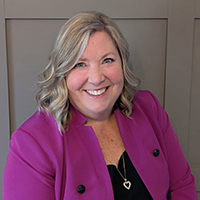
Biography
I am a values-driven leader you can trust to stand with nurses every time. If re-elected, I will continue to lead with integrity, transparency, and a deep commitment to every member's voice. I am committed to building on the progress we have made; advocating for safe workplaces, fair contracts, and respect for nurses by:
• Addressing staffing ratios
• Working diligently to increase member engagement and involvement
• Ensuring timely resolution of member concerns
• Providing sound, accountable governance
• Supporting the regional and steward teams
I will lead with courage, listen with respect, and advocate with determination, because nurses deserve nothing less. Our strength is our solidarity-I will keep working to protect it.
Danette
Role based questions
- What do you see as the primary role of a regional council member in a member-driven union?
The primary role of the RCM is to balance the priorities of the membership ensuring decisions made by the region and council reflect the needs of members on the ground. The RCM participates in governance and strategic direction and shares in the fiduciary responsibility of council. They provide advocacy, member representation, and support public and government relations. The RCM also provides leadership to the regional executive, and together they develop and execute the regional operations plan - What is the single most important value a regional council member must have, and why?
Integrity is the most important value. It means aligning words and actions and choosing what is right over what is easy or popular. RCMs must be accountable for their decisions, explain their reasoning, and remain open to feedback. This also means advocating for members even when conversations are difficult, and ensuring issues are not overlooked for the sake of convenience. Integrity strengthens trust, as members know their representatives will act with honesty, fairness, and respect. - How can technology be used to strengthen member engagement, democratic participation, and accountability in the union - and what safeguards are necessary to ensure equity, privacy, and trust?
Technology can strengthen engagement by sharing timely updates, hosting virtual meetings, and using surveys that allow members to easily provide input or vote. These platforms expand accessibility, especially for remote members and shift workers, and offer increased opportunities to participate in union decisions. Safeguards-such as strong privacy protections, secure platforms, and equitable access-help ensure members can participate confidently and trust that their information remains protected - Describe your approach to listening to members who may feel unheard, marginalized, or frustrated with BCNU?
I believe in being an approachable leader who creates space for members to share concerns. I prioritize empathy and active listening to truly understand members' experiences. I value listening to understand-not just respond-and I continue working to improve this practice. I am honest about what I can and cannot change, transparent in follow-up, and view conflict as an opportunity to learn and address issues, ensuring members feel heard, respected, and supported. - How do, or would, you approach conflict (i.e., between members within regional teams and/or Council, or between BCNU and the employer) while maintaining professionalism and fairness?
I address conflict respectfully and professionally by going directly to the source, speaking one-on-one whenever possible. I ask questions to understand different perspectives and focus on facts, policies, and fair processes. By grounding conversations in established practices, I help keep discussions focused on solutions rather than personal disagreements. I believe relationships matter, and it's okay if we disagree at times, we are all on the same team. - How do you balance representing the will of members with responses to uphold bylaws, policy, collective agreements, and human rights obligations?
My first step is to listen to members without judgment, in order to understand their concerns and perspectives. I believe in clear, transparent communication and in explaining how decisions are guided by policies, bylaws, and legal responsibilities. If change is needed, I support constructive advocacy through established democratic processes, so members can bring issues forward to council or convention. This ensures their voices are heard and allows the membership to vote on the issue. - What past experience best prepares you for this role as regional council member, and what lessons from that experience will guide your work?
Serving as a steward and regional OH&S representative has developed my skills in evidence-based decision-making, member advocacy, and representation. As an RCM and a member of other committees, I have gained valuable experience in effective board governance, collaboration, and strategic decision-making. Together, these opportunities have given me the skills, knowledge, perspective, and confidence to represent and lead the region and contribute meaningfully to BCNU Council. - How do you communicate complex or controversial decisions to members in a way that builds trust, even when members disagree?
When communicating board decisions that may be complex or controversial, I focus on clarity, transparency, empathy, honesty, and respect for our members. I explain the process used to reach the decision, the information and constraints considered, and how different perspectives were evaluated. I ensure members have opportunities to ask questions and receive timely updates. Trust is built through openness and respect, and by ensuring members feel informed and valued-even when they disagree. - How do you ensure your decisions are informed by evidence, member input, and long-term considerations, rather than urgency or pressure?
I have learned to slow down and avoid making decisions before fully gathering the necessary information. I verify the accuracy of the data provided and speak directly with members who may be impacted, as well as with involved stewards and BCNU staff, to ensure fulsome representation. We then work as a team to review the information and consider both the short- and long-term impacts before making a decision. This approach helps ensure the best possible outcomes for all involved. - Describe a concrete example where you used technology to improve communication, decision-making, or organizing. What worked, what didn’t, and what would you do differently as a union leader?
I created a Facebook group for northern nurses to connect and support each other during the pandemic, including sharing resources like childcare. I later recognized the risk of employer monitoring and took steps to protect members by strengthening privacy settings, increasing administrators, and implementing post approvals. I also clearly informed members of these changes and the reasons behind them to help keep everyone safe from potential employer repercussions. - How do you guarantee culturally sensitive interactions with your members?
I recognize the importance of understanding my own biases and committing to ongoing learning. I use inclusive language, avoid stereotypes, and remain mindful of how messages may be interpreted. I encourage diverse participation and aim to create safe spaces where members feel comfortable speaking up. When needed, I seek support from the DEI department. I am also committed to supporting cultural learning opportunities across our region, including for the executive, steward teams, and membership. - How has your understanding of the principles of diversity and/or equity and/or inclusion evolved?
My understanding of DEI continues to evolve, and I remain committed to ongoing self-reflection and learning. I aim to foster a culture where members don't just survive but thrive, and where everyone feels a sense of belonging, as I did when I first joined the BCNU. By creating supportive, respectful, and inclusive spaces, we strengthen our union, our profession, and our workplaces.
Technical Questions
- What is your experience with Microsoft Word, Excel, and Outlook and what is your ability and willingness to learn new computer platforms and applications (e.g. BoardEffects, Expensify, Formstack, Ceridian Dayforce, ZOOM, Box, etc.)?
I am experienced in the union's platforms and, over the years, have become comfortable using Microsoft Word, Outlook, BoardEffect, Expensify, Formstack, Dayforce, Zoom, and Box. I would like further experience with Excel, Microsoft Teams, and Boomi. My biggest technical challenge has been transitioning from a HP computer to a MacBook during my last term, which required adapting to new systems and workflows. - Where and how have you developed your historical and technical base of understanding in all areas of the union’s work including bargaining and BCNU policies and procedures?
My active involvement began with the LPN campaign, after which I became a steward. From 2014 to 2017, I served on the Regional Executive in the OH&S portfolio, and in 2017 I was elected Northeast Regional Council Member. In 2018, I completed a Certificate in Governance and Leadership. I have relied on BCNU policies and procedures to guide my decisions and gained strong insight into the bargaining process, including priority setting, negotiation, ratification, and implementation. - How would you describe your understanding of budgets and financial statements and the general structure and function of BCNU’s financial systems as well as the broad economic picture of BCNU?
My leadership in BCNU and my work on the Retirement Benefit Committee have given me a strong understanding of budgets, financial statements, and the structures, policies, and procedures that safeguard members' dues and other funds. The funds we receive through bargaining and investments have contributed to our financial security. Council has also ensured we are prepared with a strong defence fund should we reach an impasse at the bargaining table, at the direction of the bargaining team.
Communications Secretary
Carla Weetman – Acclaimed
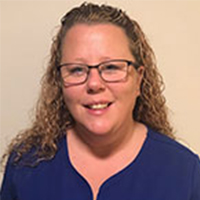
Biography
I am a highly motivated, organized person that has had the privilege of supporting the North East members as part of the Executive for the last 8 plus years. I continue to be a suitable candidate for this position as I have been actively in the coms position for the last 4 plus years and understand what it takes to facilitate the needs of the members here, and the vast geographical area that we need to work within. I have been a nurse for almost 19 years and a steward for just over 10 years so also understand the challenges our nurses face in the North. My hope is that I can continue to support the Nurses of the North East and continue this work and my learning with this position.
Role based questions
- How would you ensure regional communications are timely, accurate, and accessible to members with diverse needs and communication preferences?
I am a very organized, dedicated individual, who has an attention to detail. I like to be ahead of the game when possible, so once the executive team has decided events, I start putting things into action. I put out information in a variety of ways to help facilitate different communication preferences. - What tools or platforms have you used for newsletters, social media, or websites, and how would you use them to strengthen member engagement?
I use the resources supplied by BCNU to promote events in our area, such as Cvent, Campaigner and the Events Calendar. Using templates supplied for Events posters ( like mini Regionals) and dispersing information through a variety of methods including rack cards assist in keeping events going, and informing people of upcoming meetings/events. - How would you communicate difficult or controversial decisions while maintaining transparency and member trust?
Being honest and noting a team decision or policy as needed is important. Having transparent results or sources of information is also key. Its important to keep people informed in a timely manner. While it can be difficult to not want to hurt feelings, I think being honest and indicating policy where needed helps guide what we are working to achieve. - If misinformation begins circulating among members, how would you respond quickly and responsibly?
I would encourage members to look into reliable resources and point them to BCNU website or other documentation for such facts. I would encourage members to seek information supplied by the region, as well as head office, and point people to specific areas when needed. - How would you work with other regionally elected leaders, Council, and BCNU staff to ensure consistent messaging across the region?
Being part of the North East Executive for the last 8 plus years, I am well versed with working with other regionally elected leaders, Council and BCNU staff. I currently work with our regional elected team and use what we have decided as a guideline for executing the plans. When needed, I seek clarification from the team or the RCM as needed. - How do union values such as integrity and solidarity inform how information is shared?
Using the union values of integrity and solidarity are key principles that we need to maintain. Both of these values is what gives our union strength. When we don't have that, we are not able to operate adequately as a union. - Why do you want to serve in the role of Communications Secretary, and how will you ensure communications reflect member priorities and BCNU's Strategic Directions, rather than personal opinions?
I have currently been in this role for the last 4 plus years. I have been part of the executive for the last 8 plus years. I think having some continuity to the role as well as the team best serves the members in the area. . I think its important to make sure members are given opportunities to be provided information and education regarding their union and contract. - How has your understanding of the principles of diversity and/or equity and/or inclusion evolved?
I feel that my understanding of diversity, equity and inclusion has evolved during my time as a steward as well as a being part of Regional Executive. I think it is good to acknowledge where we don't know things, keep an open mind to learning and listening to other people's point of view and that it is important to do thing from a place of understanding - not just "ticking a box". - How do you ensure your decisions are informed by evidence, member input, and long-term effects rather than urgency or pressure?
We try to make all of our events based on a team decision. We factor in input received from member and steward surveys to help guide what our members needs are. Urgency and pressure can be difficult to measure, as it can be ever changing depending on what is happening in certain areas of the province and what is happening locally as well. However, keeping the members at the front of our decisions, while following policy is always a good starting point.
Lobby Coordinator
Raelene Stevenson – Acclaimed
She, her, hers
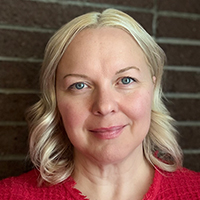
Biography
I have been living in the North East region of British Columbia most of my life, with Prince George being my home for the last 25+ years. I have been nursing for 10 years now and I still enjoy the challenges and complexities of bedside nursing. I am seeking the Lobby Coordinator position to continue on the work I have been doing over the last term, which has been to lobby for improved nursing conditions and better healthcare for our province. My objectives this term are to empower our union members to engage in activism through community and regional events. Additionally, I want to champion the mNPR implementation for our region through member and public engagement opportunities.
Role based questions
- What is the role of a Lobby Coordinator, and how does it support members’ interests?
The LC role supports members interests mostly through engagement. Outreach, such as site visits or min-regionals, allow our team to glean main themes of concern and relay those concerns to political representatives. This engagement brings forth the challenges that community, public health and front line nurses face every day and projects those obstacles into the political sphere in hopes of influencing change(s) where needed in the provision of health care services. - How would you identify and prioritize political or legislative issues that matter most to members?
Engagement with membership is paramount in identifying and relaying any political or legislative issues that may impact membership. I have a keen interest in politics and stay informed on provincial and federal issues as they pertain to healthcare. I watch the BC Legislative question period and I do believe my strong political interest(s) informs me on how provincial and federal politics impact healthcare. - How would you communicate BCNU positions effectively to elected officials or decision-makers?
For the last three years while being in this role, I have worked on my public speaking ability, media engagement and political representative interactions. I have cultivated professional relationships with Councillors, Mayors and MLAs and I believe I have built a trustworthy rapport. This relationship allows for fulsome and transparent discussions with representatives to ensure the concerns of the nursing profession are understood and why political pressure is needed to guide change. - How would you ensure your advocacy reflects BNCU's Strategic Directions rather than personal political views?
I would ensure my advocacy reflects BCNUs strategic direction by staying on key themes as guided by the union. I champion collectivity from our membership and highlight the overall concerns that arise with each region or sector of the nursing profession. I have been able to cultivate relationships with members and political representatives alike, that do not necessarily align with my views and yet still provide the appropriate messaging of our unions strategic direction. - How would you work with members, regional elected leaders, coalitions, and community partners to advance BCNU goals?
Advancing BCNU initiatives and messaging requires collectivity from the membership. I would continue to engage with community and regional coalitions who have an interest in public health and social consciousness. I would also engage with our Human Rights and Equity groups to reach varying demographics of our membership and communities. Union solidarity improves when we engage with the breadth of our membership and support the varying interests that positively affect our communities. - How would you navigate political pressure while maintaining information and union integrity?
To ensure union integrity I would continue to learn and seek guidance from the BCNU media and communications team(s). I will champion the strategic directions of the union and continue to ensure nurses voices are heard in a manageable way in to garner continued support for healthcare change. - Why do you want to serve in the role of Lobby Coordinator, and how will BCNU values guide your political advocacy?
BCNU values guide my engagement as showcased by my continued commitment to the northern region membership outreach. While my political position may not align with my all of my co-workers or regional political representatives, I am guided by the fundamental understanding that healthcare is an absolutely necessity for our societal collective. I consistently champion the need for equitable care throughout our rural sites and for the diversity of our patients throughout the region. - How has your understanding of the principles of diversity and/or equity and/or inclusion evolved?
My understanding of DEI has and is continually evolving. I have been fortunate to engage with our diverse membership, while also being educated on the inequities some of our membership are still facing on a daily basis. I engage with our Equity seeking caucuses and discuss how best to provide support to their specific causes. I engage with our regional political partners to highlight the inequities faced by our members, particularly with our regard to our Internationally Educated nurses. - How do you ensure your decisions are informed by evidence, member input, and long-term effects rather than urgency or pressure?
This also comes down to member engagement and the collective concerns of our union. Consistently hearing from the members and collating that data into appropriate and applicable themes, provides the consistency messaging to our regional and community political representatives. I have also had members join me in MLA meetings so that their local representative can truly understand the healthcare challenges first hand. I think this is grass-roots approach supports buy-in to the nurses' cause.
Mental Health Representative
Caitlin Crick – Acclaimed
She, her, hers

Biography
Hello everyone!
My name is Caitlin. I am currently serving as the NE Mental Health Rep.
I have served as the MH Rep for the past 5 years, and have worked for most of my nursing in the community of Dawson Creek on the Medical-Surgical Unit. In June 2025 I relocated to serve a term in the Medicine Unit Clinical Nurse Educator position at UHNBC in Prince George.
I am running again for Mental Health Representative for the Northeast region because I remain committed to advocating for nurses' psychological health and safety. Having now worked in both small and large acute sites allows me to be more understanding to both the similar and unique issues members face. I respectfully ask for your support and vote to continue serving as the MH Rep.
Role based questions
- What do you see as the key responsibilities of a Mental Health Representative within the union?
Acting as an advocate for members experiencing work‑related mental health challenges, including stress, burnout, compassion fatigue, moral distress, and trauma.
Raise systemic mental health concerns (e.g., chronic understaffing, unsafe workloads, workplace violence) with the employer through union channels.
Support members by explaining collective agreement provisions, WorkSafe and OH&S protections, and accommodation rights related to psychological injury.
Promote mental health literacy. - How would you balance support for members’ mental health and BCNU's Strategic Directions?
Supporting members' mental health is integral to BCNU's Strategic Directions. By listening to members while identifying systemic issues-such as unsafe workloads, workplace violence, and moral distress-I would elevate concerns through union and OH&S structures. Framing mental health as a workplace safety and collective agreement issue strengthens advocacy, bargaining, and member engagement, supporting sustainable nursing practice and safe patient care. - How would you promote mental health awareness and reduce stigma among members?
I would promote mental health awareness by normalizing it as a workplace health and safety issue, not a personal weakness. Through union communications/meetings, I would share information on burnout, trauma, and psychological injury, and link these issues to workload, staffing, and violence prevention. By encouraging peer‑based, trauma‑informed support and integrating mental health into existing union structures, I would help create a culture of openness, respect, and early support. - How would you respond when members are in distress or facing systemic mental health challenges at work?
When members are in distress, I would respond with empathy, respect, and confidentiality, providing peer‑based support. I would help connect members to appropriate supports such as stewards, OH&S processes, or EFAP. When issues are systemic-such as unsafe workloads, violence, or chronic understaffing-I would identify patterns and raise them through union and health and safety structures, framing mental health as a workplace issue requiring collective action and employer accountability. - How would you work with stewards, health and safety reps, regionally elected leaders, and BCNU staff mental health issues?
I would work collaboratively with stewards, health and safety reps, regionally elected leaders, and BCNU staff by sharing information, respecting their roles, and protecting privacy. I would help connect the right people based on whether concerns are individual, safety‑related, or systemic. By identifying patterns and aligning mental health concerns with existing union structures, I would support coordinated advocacy, collective problem‑solving, and consistent messaging across the membership. - How do diversity, equity, and inclusion inform your approach to mental health advocacy?
Diversity, equity, and inclusion shape my advocacy by recognizing that stigma, access to supports, and workplace impacts are not experienced equally. I approach this work with cultural humility and a trauma‑informed lens, listening without assumptions and respecting lived experience. I strive to ensure mental health advocacy is inclusive of Indigenous, LGBTQ2S+, internationally educated, and other members, and focused on addressing systemic barriers and creating safe workplaces for all. - Why do you want to serve in the role of Mental Health Rep, and how will you ensure members’ lived experiences shape your work?
I witness how workload pressures, trauma, and moral distress impact nurses' wellbeing and retention. I am motivated to ensure these experiences are heard and addressed through union advocacy. I will center members' lived experiences by listening with respect, maintaining confidentiality, and identifying shared themes to raise through union structures, ensuring mental health advocacy reflects real workplace realities and supports meaningful, system‑level change. - How has your understanding of the principles of diversity and/or equity and/or inclusion evolved?
My understanding of diversity, equity, and inclusion has evolved from hypothetical values to essential, practical principles that shape everyday work experiences. By listening to colleagues, I've learned how identity and systemic barriers affect mental health and access to support. This has strengthened my commitment to cultural humility, centering the lived experience, and addressing inequities through ongoing and intentional action, versus 'checking off a box'. - How do you ensure your decisions are informed by evidence, member input, and long-term effects rather than urgency or pressure?
Currently, I ensure my decisions are informed by evidence, member input, and long‑term impact by slowing down under pressure. I listen to members, look for patterns rather than isolated issues, and review relevant policies, collective agreement language, and best practices. I collaborate with stewards, OH&S reps, our OHS Officers, and union leaders to challenge assumptions and consider consequences, ensuring responses are thoughtful, balanced, and sustainable rather than reactive.
Occupational Health and Safety Representative
Rachel Peever – Acclaimed
She, her, hers

Biography
I'm Rachel Peever. I am a RN who works in Prince George, in the ICU as a clinical mentor & RN, as well as in PACU. I have been a member of my worksite's Joint Occupational Health & Safety (OH&S) Committee since April 2024 & became co‑chair in May 2025. I'm also a BCNU steward. My work in OH&S began after experiencing unsafe conditions firsthand & realizing that was not acceptable. Across our region, members face frequent hazards including violence, illicit substance exposures, & risks that are too often minimized. I take action by listening to concerns, ensuring members know their rights, empower them to report their concerns, & work with legislation & union supports to demand safe workplaces. Northern nurses, you all deserve to be safe!
Role based questions
- What experience do you have with workplace health and safety, and how would you advocate effectively for safer workplaces?
Since April 2024, I have served on the JOHSC at UHNBC & Jubilee Lodge in Prince George, & became co‑chair in May 2025. After experiencing an unsafe workplace myself, I became deeply committed to improving safety for nurses. I listen closely to frontline concerns, ensure nurses are aware and educated about the proper reporting processes, take part in workplace inspections and investigations, and use legislation and evidence to advocate for safety and to support meaningful change. - How do you stay informed about occupational health and safety legislation and best practices?
I stay informed by combining committee work, ongoing education, and collaboration with experts. As a JOHSC member, I regularly review WorkSafeBC legislation, employer policies, and safety reports. I work closely with clinical teams to address risks and stay connected to frontline staff to identify emerging concerns and to discuss approaches that are realistic & meaningful for their particular site/unit/type of work. - How would you identify and prioritize health and safety risks affecting members in diverse workplaces?
I identify and prioritize risks by listening directly to members and frontline workers, encouraging reporting through supervisors & the PWHCC, & reviewing incident trends. With 16 years of nursing experience across acute care, community, & administrative settings, I understand that hazards vary by workplace. I work with site‑specific experts and prioritize risks based on severity, exposure, workers affected, and legislative requirements to ensure equitable and appropriate action. - How would you handle disagreements with employers on safety issues?
I handle disagreements with employers in a collaborative, solution‑focused way while being clear that worker safety is non‑negotiable. I listen to the employer's perspective, use WorkSafeBC legislation and the Workers Compensation Act to guide discussions, and ensure accountability for controlling risks. If issues cannot be resolved collaboratively, I advocate for members through formal escalation processes. Ultimately, my goal is always resolution, but never at the expense of worker safety. - How would you explain safety rights or hazards to members and stewards in a clear and practical way?
I am an educator at heart and draw on my experiences as a clinical mentor & nursing instructor to support union members in understanding health & safety. While safety work is serious business, I believe engaging, accessible education helps members to better recognize hazards, exercise their rights, & more confidently report concerns, which helps to further strengthen our collective voice and ability to advocate for safer workplaces. - How would you work with stewards, regionally elected leaders, Council, and BCNU staff to advance BCNU's Strategic Directions?
I will advance BCNU's Strategic Direction through respectful collaboration that centers the experiences of northern members. I will focus on clear communication and developing and maintaining strong partnerships with stewards, regional leaders, Council, and BCNU staff. Drawing on my experience as a steward and JOHSC member, I will ensure frontline concerns inform regional decisions and ultimately work to protect and empower members and promote safe and healthy workplaces across the North East. - Why do you want to serve in the role of Occupational Health and Safety Rep, and how will you ensure members’ safety concerns drive your work?
Safety work begins with listening to members. I am committed to being visible, approachable, and accountable across our region. I will work collaboratively with union members, JOHSC members, stewards, and union leadership to ensure equitable standards and protections for all. Whether you work in an urban center like Prince George, a rural site like Fort Nelson, or a remote health center, safety is a right shared by every BCNU member. - How has your understanding of the principles of diversity and/or equity and/or inclusion evolved?
My understanding of diversity, equity, and inclusion is ongoing and evolving. I have learned the importance of listening openly, approaching differences with humility, and engaging with curiosity rather than assumptions, grounding my perspective in learning and understanding. This shapes how I show up as a nurse, educator, leader, and union activist, by creating space for less‑heard voices, questioning assumptions, and remaining accountable to continued learning, reflection, and growth. - How do you ensure your decisions are informed by evidence, member input, and long-term effects rather than urgency or pressure?
My decision‑making is shaped by my background in critical care nursing, where knowing when to act immediately and when to pause is essential. That experience helps me know when to act quickly and when to slow down and engage more perspectives. I listen carefully to member concerns, ground decisions in best practices, evidence, legislation, and member input, and focus on meaningful, sustainable solutions rather than reactive ones.
Professional Responsibility Advocate
Krisha Dodds – Acclaimed
She, her, hers

Biography
My name is Krisha Dodds, I have been a nurse for 26-years and have worked in a variety of settings from ER, Education, and most recently a Program Lead. I have served as the Professional Responsibility Advocate in the NE for almost 4 years now. I pride myself in being a lifelong learner and believe that the Professional Responsibility process, be it challenging at times, is an essential component that links the NBA contract to BCCNM nursing practice standards helping to ensure patient safety. We work in a diverse and ever-changing environments, with a wealth of knowledge and experience around us, and I pride myself to always listen, ask curios questions, and approach situations with respectful professional collaboration.
Role based questions
- What does professional standards mean in a union context, and why is it important for members and the public?
Nurses are bound to professional standards and the BCNU Professional Responsibility process is a way for nurses to have an avenue to have collaborative conversations with leadership to outline concerns and the impact that not upholding professional standards can have on patient care and patient safety. - How would you balance accountability, fairness, and compassion when professional concerns arise?
Listening and holding space for members is essential. I have been a nurse for 26 years and I have worked in a variety of settings from ER to Education and most recent a Program Lead, and I have developed skills to approach situations with respect, kindness, privacy, upholding confidentiality, managing expectations, and I have the situational awareness to identify when a conflict of interest may exist. - Describe how you would approach sensitive or contentious professional standards issues.
I believe no nurse wants to make a mistake or breach their professional standards. No matter the context, people can't truly hear when then are heated or upset, providing a private and confidential space for members to share those feelings is first and foremost. I would ensure I am aware of the details and facts from the employers' side and the members side and work through the appropriate processes, utilizing my resources and team to strive for the most appropriate outcome. - How would you explain complex or emotionally charged standards issues to members?
Typically, the employer will be the first one to call a meeting or have that conversation with the member. I would ensure I had all the information which starts with ensuring privacy and confidentiality is maintained. I would spend time and if possible, in person, to provide that support and develop the relationship to listen, asking curious questions, establish the facts, manage expectations and ensure processes were followed. - How would you work with regionally elected leaders and BCNU staff in managing sensitive professional issues at diverse worksites?
I have a professional and respectful approach no matter who I am working with. When discussing issues bring brought forward, following established communication pathways, policies and procedures is important, as well as ensuring I have the members consent to share information with BCNU staff and elected leaders as to maintain the appropriate level of privacy and confidentiality. - How would you ensure members understand professional standards in comparison to collective agreement language?
Nurses are very aware of the BCCNM standards and ensuring they are providing safe patient care so that their license is not at risk. Where the knowledge gap sometimes exists is with the NBA contract, and ensuring adherence to the employers policies and procedures in dynamic work environments that are sometimes not conducive to even meeting BCCNM standards. - Why do you want to serve in the role of Professional Practice Advocate, and how will BCNU values guide your decisions?
I have served in the role the past 4 years and have learned a lot, I have personally used the PR process with success several times, so I speak from frontline experience - it works. I value transparency, fairness, equity, and ensuring standards are being upheld so patients are safe and nurses' mental health is maintained. I am comfortable having crucial conversations and collaborating with all levels of leadership to respectfully address members concerns. - How has your understanding of the principles of diversity and/or equity and/or inclusion evolved?
Collectively we all will never stop learning to truly support the principles of DEI. Awareness is key, words matter, and everyone has a story. I pride myself in listening, holding space, asking curious questions, and simply being kind to build upon my own personal and professional evolution. - How do you ensure your decisions are informed by evidence, member input, and long-term effects rather than urgency or pressure?
The bulk of my 26-year career was in the ER, I am well versed in triage, establishing priorities, teaching, learning, managing expectations, and utilizing all types of resources to ensure all the information and facts required are explored. Listening to all sides is essential, not making assumptions, and providing space and time for processes to work is paramount.
Steward Liaison
Vacant
Treasurer
Jereme Bennett – Acclaimed
He, him, his

Biography
•23 years of nursing in various settings and roles. The first 5 years as an LPN and the last 18 years as an RN.
•Worked in Neurosurgery at RCH, Palliative Care in Northern Health, and currently Program Lead for Family Medicine at UHNBC.
•Representing members for 16 years as a BCNU steward, Regional OH&S Representative, Treasurer, and interim Regional Council Member.
•Northeast Regional Treasurer since 2021.
•Member of the 2023 and 2025 BCNU Bargaining Committee.
Role based questions
- What experience do you have with budgeting, financial oversight, or reporting, and how will you ensure members’ dues are managed responsibly and transparently?
I have been the Treasurer for the last 5 years for the Northeast Region. I will ensure adherence to the financial policies of BCNU when spending decisions are discussed and made. - What financial tools or systems have you used, and how would you use technology to improve accuracy, reporting, or accessibility of regional financial information?
I am trained in Netsuite and have been to Treasurer training offered by BCNU. This allows me to makes up to date decisions and report accurate information. - How would you explain a difficult or controversial financial decision to members in a clear, accessible, and respectful way?
I would follow the financial policy of the union. I try to ensure all members are aware of the policies prior to an event. However, when making a difficult decision it is important to refer back to the policies and be consistent for all members. - Describe a time you had to question a financial decision or raise concerns about governance or spending. What guided your approach?
I believe in asking questions. I have been in a position to examine the BCNU Provincial budget and help formulate the Regional budget as well. When there is something I do not understand, or a possible error, I speak up to ensure I understand the issue or point out an issue that may have been missed. - When there are disagreements about spending priorities, how would you manage conflict while upholding union values and maintaining trust?
I follow the policies of BCNU. If there is a disagreement on the Regional Executive about spending priorities, itis important for every one to have their say, then a vote be held. Majority makes the decision. - How do you see the Treasurer working with other regionally elected leaders, Council and BCNU staff to support effective regional governance?
The Regional Treasurer has a vital role in ensuring budgets are maintained and that spending is controlled and in line with the Operations plan for the region and is aligned with the BCNU Operations plan. It is important for the Treasurer to keep the rest of the executive team up to date on budget issues so planning and outreach can be effective and within budget. - Why do you want to serve in the role of Regional Treasurer, and how will you ensure your decisions consistently reflect the needs, equity considerations, and voices of members all while supporting BCNU's Strategic Directions?
I want to be Regional Treasurer to support my region and my colleagues in advocating and supporting the members as effectively as possible. This role allows me to do so and helps ensure the financial health of the region and the union. - How has your understanding of the principles of diversity and/or equity and/or inclusion evolved?
I have always believed in fairness and access for all. I have come to understand it is important to provide opportunity for everyone to participate in the operations of BCNU and to feel supported in their worksites. DEI reminds us that support cannot be one sized fits all, and we must look at the individual and systemic characteristic of each situation and adapt accordingly. - How do you ensure your decisions are informed by evidence, member input, and long-term effects rather than urgency or pressure?
I would ensure adherence to BCNU Financial Policy, provide accurate financial information based on historical evidence and ensure members we part of the process.
BCNU Election Candidate Attestations
All regional candidates have affirmed yes to attestations (1-9) below:
- I am a member in good standing of BCNU, with no outstanding disciplinary proceedings, and meet all BCNU Constitutional and Bylaw eligibility criteria for the position I am seeking.
- I commit to upholding BCNU’s Constitution and Bylaws and the Policies and Procedures, and will engage in ethical, respectful, and inclusive conduct during the election and throughout any term in office.
- I have reviewed and understand the fiduciary duties and responsibilities as described in Policy 2.0.1 and in the job description, including the duties of care, loyalty, compliance, confidentiality, and accountability to BCNU’s vision, mission, values, and members.
- I affirm that I will protect and safeguard any member information, BCNU internal documents, or confidential records that may be made available to me during the course of this election or while in office.
- I will disclose any real, perceived, or potential conflicts of interest prior to or during my candidacy and, if elected, will comply with all conflict-of-interest policies and governance requirements.
- I have reviewed and understand the election code of conduct as stipulated in Policy 2.0.7, including the guiding principles for BCNU elections, candidate and BCNU member roles and responsibilities, and the rules pertaining to campaign materials.
- I will not engage in any campaigning, communications, or actions that may be reasonably understood to involve misinformation, personal attacks, or harassment, and I understand that such behaviour may result in immediate removal from the election process.
- I hold current registration in good standing with the British Columbia College of Nurses and Midwives (BCCNM) and confirm there are no current findings of professional misconduct, suspension, or conditions on my nursing license.
- I understand that all attestation statements are subject to verification by the BCNU Nominations Committee, and false declarations may result in immediate disqualification from candidacy or immediate removal from elected office.