

 Interim Executive Councillor for Occupational Health and Safety and Mental Health: “If there’s no data, there’s no change.”
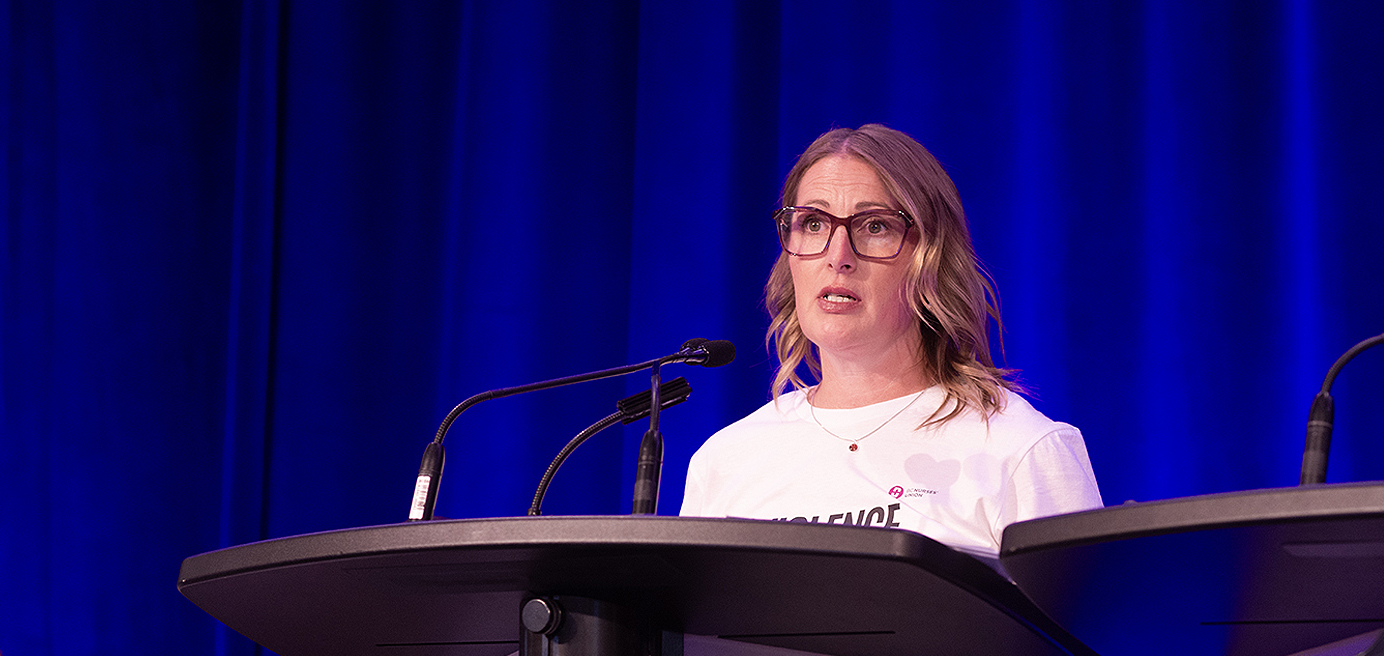
BCNU Interim Executive Councillor for Occupational Health and Safety and Mental Health Denise Waurynchuk delivered an assertive, direct report recognizing the critical work of occupational health and safety (OHS) representatives, mental health advocates, joint occupational health and safety (JOHS) committee members and enhanced disability management program (EDMP) representatives across the province.
“This room is stronger because of you,” she said. “You support members every day, and you push for change. Thank you.”
Waurynchuk told delegates about the encouraging progress being made in northern regions where increased hazard and incident reporting is improving data collection and helping move workplace injury and violence into health-care conversations. She also outlined several major initiatives underway in BCNU’s OHS and mental health portfolio, including the current Violence. Still Not Part of the Job campaign, October’s BCNU Mental Health Awareness Month, May’s North American Occupational Safety and Health Week, and new and existing training opportunities for supervisors, JOHS committee reps and members alike.
Waurynchuk unveiled BCNU’s new member-facing campaign, Shine a Light. Report It., aimed at addressing widespread underreporting of workplace violence, injuries and hazards by educating members on how to report incidents and why documentation is essential to creating safer workplaces.
“Too many workplace incidents are only informally shared, managed quietly or simply accepted as part of the job, leaving serious hazards invisible,” said Waurynchuk. “This campaign reinforces that reporting is the foundation of safer workplaces, driving documentation, investigations, accountability and system-wide changes.”
Waurynchuk underscored that violence and workplace harm remains a daily reality for nurses, warning that too many incidents are normalized, quietly managed or never formally documented.
“If we aren’t reporting, these incidents don’t get captured and trends don’t get identified,” she explained. “If there’s no data, there’s no change.”
She closed her report by urging members to continue speaking out, report hazards and refuse to accept violence as part of the job.