
 Off Duty
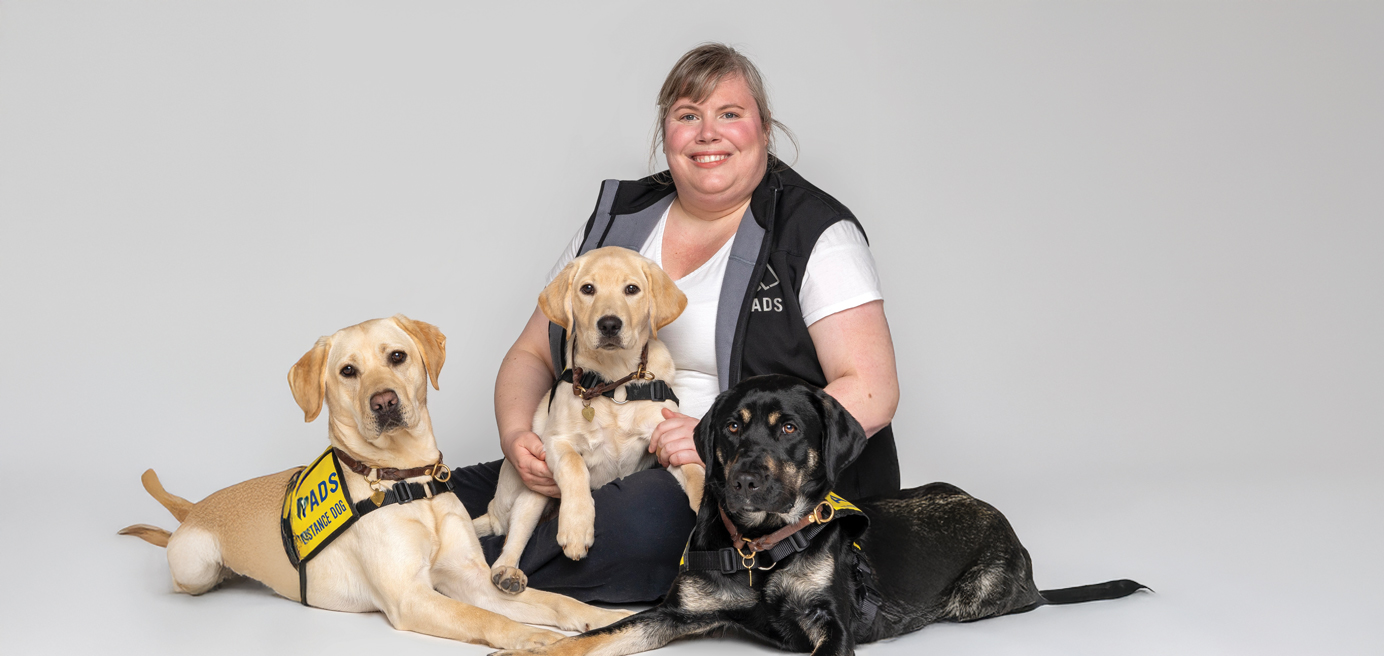
BEST FRIENDS BCNU member Nicole Schnapp with PADS trainees Hazel, Saphira, and Towhee.
On the Family Birthing Unit at Surrey Memorial Hospital, Nicole Schnapp helps bring new life into the world. At home, she raises Pacific Assistance Dogs Society (PADS) puppies, guiding them through their early months so someone else can one day move through the world a little more freely. A labour and delivery nurse and long-time volunteer with PADS, Schnapp’s work – paid and unpaid – is shaped by the same commitment: preparing others to thrive, even when it means letting go.
An RN, Schnapp graduated from BCIT in 2013 and has spent most of her career working in labour and delivery. She began volunteering with PADS in 2012, initially as a dog sitter. She wanted a dog, but with shift work and long hours, full ownership didn’t feel realistic. She found PADS online and has never looked back.
Today, Schnapp is both a volunteer puppy raiser and a puppy program trainer. She supports a cohort of about 20 dogs and volunteer raisers, often while raising two – and right now three – dogs in her own home. PADS assistance dogs live fully integrated lives with their raisers during training: tagging along for work, groceries, restaurants and public transit. The goal for the dogs is confidence, adaptability and trust – skills learned only in real-world settings.
The parallels between Schnapp’s nursing work and her volunteer life are evident. At work, she supports patients through moments of vulnerability, uncertainty and transformation. At home, she raises “baby puppies,” teaching them to regulate, respond and eventually work independently. Both roles demand patience, keen observation skills and resilience.
The hardest part of puppy raising is also one of the most essential: letting go. Dogs remain with volunteer raisers for approximately 18 months before graduating to more advanced training and eventual placement with a client. Schnapp has raised more than a dozen dogs long-term and fostered many more. Each goodbye carries grief – but it’s a grief anchored in purpose.
“There’s no sugar-coating that part. You live with them for a year and a half, and you get attached,” Schnapp said. “But once you’ve had a taste of the impact these dogs have, the grief pales in comparison to the benefit and freedom they bring to someone else.”
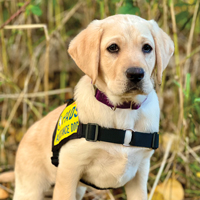
This impact comes into sharp focus when volunteers meet clients whose lives will be shaped by the dogs they helped raise. What once felt abstract becomes deeply personal as clients describe moving through public spaces independently, no longer needing to ask for help, and being engaged with, rather than disregarded by, people. For Schnapp, these moments reaffirm exactly why her work matters.
One PADS dog, Compass, holds a special place in Schnapp’s heart. Raised during COVID, Compass arrived at a time when the world had narrowed, and human connection felt fragile. Schnapp and Compass spent every moment together – cuddling, training, walking, and learning each other’s rhythms. Compass wasn’t just attentive; she was discerning. Friendly and social, she formed deep bonds with her people, offering a sense of connection that felt intentional and rare.
“Some dogs just take a bigger chunk of your heart. She was definitely the hardest one to let go.” Schnapp says. “You love them all in different ways, but some dogs stay with you a little more.”
As a nurse, Schnapp sees firsthand how access and supports shape patient outcomes. As a volunteer, she understands how much of that depends on community and advocacy. PADS relies heavily on volunteers and donors to continue its work – a reminder that independence is never built alone.
For Nicole, raising assistance dogs isn’t separate from her nursing identity – it’s an extension of it. In hospitals and homes, she helps build futures rooted in dignity and independence. •
UPDATE (Spring 2026)