

 Ready to Act

Across BC, nurses are talking about bargaining – in break rooms, at nursing stations and in group chats after long shifts. Many are asking the same questions: What happens if negotiations stall? What would job action actually look like? And what role would I play?
Among members, there is a shared understanding that this round of bargaining matters. Some are channelling their anger into a call to action. Others are carefully considering what job action could mean for their households. In different ways, nurses are confronting the same reality: what happens at the table will shape their working lives for years to come.
The pressures bearing down on negotiations are significant. With the anchor of the US trade war weighing BC’s economy down, the fight for improved wages – an uphill battle at the best of times – feels even more pitched.
At the same time, entrenched violence in health care continues to compromise members’ health and safety. Despite rising WorkSafeBC claims, the employer has taken an aggressive approach to the benefits members rely on, attempting to strong-arm changes through arbitration rather than negotiation.
While BCNU’s CEO and lead negotiator Jim Gould remains committed to resolving these challenges at the bargaining table, he wants members to know that achieving the goals they have set this round will require their active participation – and that may mean job action.
“We’re ready to use every tool at our disposal to protect NBA members’ rights,” says Gould. “That includes potentially asking members to take job action as a last resort – because we know how much power nurses hold in our health-care system.”
That power has been on display just three times in the union’s 44-year history: a province-wide strike in 1989, a public service strike in 1990 and an overtime ban in 2001. While rare, these historical moments were potent, reshaping the nursing profession. Job action helped secure pay parity for public service nurses and delivered substantial NBA wage increases – victories won in politically hostile environments. These examples underscore what nurses can achieve when they act collectively to demand transformational change in the health-care system.
Members’ power to re-shape health care came into view more recently after the last round of negotiations concluded, when BCNU and the provincial government came to a separate agreement to implement minimum nurse-to-patient ratios. With ratios now rolling out in units across BC, members are already reporting meaningful improvements in both working conditions and patient safety.
Similarly, advocacy from traditionally underrepresented BCNU members helped secure important protections for these nurses in the 2022-2025 NBA provincial collective agreement, including leave provisions for members seeking gender-affirming care and incorporating the Declaration on the Rights of Indigenous Peoples into the language of the contract.
“Whether we take job action or not, this bargaining season is going to be historic,” says Provincial Job Action Committee (PJAC) member Julie Bodden. “It’s going to be in the memory of BCNU for decades to come. This is our moment.”
That’s why, as contract negotiations continue in 2026, BCNU’s leadership has prioritized job action readiness, and why they’re asking all members under the NBA contract to prepare.
“If we reach an impasse, showing the employer that we are prepared and serious about job action can bring them back to the bargaining table,” says BCNU President Adriane Gear. “That’s why we want every NBA member to be ready.” •
From Preparation to Collective Power
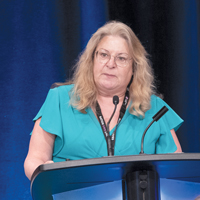
Knowing this would be a difficult round, the union has been preparing for possible job action since negotiations began in 2025. Since BCNU has not taken significant job action in more than two decades, the task has been an especially challenging one.
Update Magazine sat down with PJAC Chair and BCNU Treasurer Sharon Sponton to discuss how the committee has been preparing for job action – and what members can do to pitch in.
UPDATE Many members hear the words “job action” and immediately think “strike.” Can you explain what job action really means and the different forms it can take?
SPONTON Job action is a tool to support our bargaining committee, to ensure they have the collective power of the membership if they reach an impasse at the table.
A strike vote does not necessarily mean we’ll be out on a picket line. Sometimes, a strong strike mandate is enough to shift the dialogue and get negotiations back on track.
If the bargaining committee does call for job action, it can take many different forms, that could include an overtime ban or a work-to-rule – where members work only their scheduled shift and take their full breaks. Banning non-nursing duties can also be highly effective. Non-nursing tasks like making beds, delivering trays, transcribing orders and answering phones all take up a lot of time and are critical to the normal functioning of the workplace.
If more pressure is needed, job action may escalate to picket lines and a strike. Even then, we escalate strategically. We might take one worksite out one day and another the next. The committee will make decisions in consultation with the bargaining committee and council. The goal is always to maximize pressure on the employer and minimizing impacts on members – while ensuring the public continues to receive care.
Much of the committee’s work happens long before members ever hear the words “job action.”
UPDATE How is the PJAC ensuring that members are ready for job action?
SPONTON Preparation has been ongoing. We began ramping up in the summer of 2025 with a full day of training. Since then, we’ve held meetings every two weeks to prepare. We’ve updated, refined and digitized our job action manual, a comprehensive document that will form the blueprint for any job action we might take. The committee has been forecasting potential job action scenarios and troubleshooting issues. That way, we’re ready for anything.
That readiness doesn’t erase anxiety. Job action is difficult. But it is also deeply collective.
Finally, we’ve produced a number of online modules to educate members about job action and their roles. These are available to all NBA members on the BCNU Member Portal.
UPDATE A lot of members are eager to do their part ahead of any potential job action. How can they show support for their bargaining committee and help apply pressure?
SPONTON Spreading the word and bringing the public on board is crucial. Talk to your MLA. Speak with your family, friends and neighbors. Help them understand what nurses do, what we’re bargaining for and why violence in health care is still not “part of the job.” Start with the people that you know and help them understand that we’re fighting for a contract that respects nurses.
UPDATE What’s the biggest shift you’ve seen in how members talk about job action?
SPONTON Members are ready. Our benefits survey showed that more than 80 percent would strike to protect what they have. They’re frustrated with the lack of progress on violence and with the employer trying to strong-arm changes to their benefits. Many see job action as necessary to secure a fair contract.
If we don’t end up taking job action, that means the bargaining committee was able to accomplish its mission without additional pressure. If we do need to take job action, we’ll need a strong mandate from members who are ready to hold firm. Unity will be key. Readiness is not just logistical – it’s emotional. For many members, the idea of job action can feel uncertain or even intimidating.
UPDATE What would you say to members who feel anxious about job action?
SPONTON It’s important to have a long-term view. Job action isn’t always easy, but it’s short-term pain for long-term gain. Our struggle is not just for nurses now, but for those who come after us. We have to make nursing attractive to the next generation, and we do that through ratios and a fair contract.
UPDATE What motivates you to lead this work?
SPONTON Bargaining and job action affect every single BCNU member. There’s a deep sense of collectivity and solidarity in it. It’s one of those rare moments when we can all come together – that is the heart of unionism. Standing together with your colleagues for something fair can be incredibly motivating and incredibly meaningful.
Whether job action ultimately becomes necessary or not, BCNU leaders say the work happening now – educating members, building connections and strengthening solidarity – is already shaping the outcome. In a round of bargaining that many believe will define the next generation of nursing in BC, that readiness may prove to be one of the union’s greatest strengths. •
WHAT WE TALK ABOUT WHEN
WE TALK ABOUT JOB ACTION
When union members hear “job action,” they tend to think of a strike first.
And that’s no surprise – strikes make headlines, and they can cause union members a lot of anxiety.
While a full-scale strike is a possible outcome of tense negotiations, it is always used as a last resort to get members the best deal possible. And there are a lot of ways to ramp up job action before we reach a strike. Each of these actions increases pressure on the employer while minimizing the impact on patients and union members.
A Glossary of Job Actions
Job Action/Strike: Actions that union members take to pressure the employer to offer better terms in bargaining. These can include:

Partial Withdrawal of Services / Work to Rule: Members perform only tasks that are within their job descriptions (e.g., stopping clerical or portering tasks). This may also include overtime bans.

Intermittent Withdrawal of Services / Rotating Job Action: Members withdraw their services for short periods of time. This type of job action is very difficult for the employer to plan and respond to.

Targeted Job Action: Taking out one type of service across several worksites. For example, operating rooms in all hospitals in the lower mainland or all home care nurses in the province.

Escalating Job Action: Job action begins at a single facility and gradually expands to include more worksites, building pressure on the employer.

Complete Withdrawal of Services (Strike): Full withdrawal of services and picketing across the province while maintaining essential services. The PJAC directs decisions to initiate or end strikes.

Employer Lockout: Initiated by the employer, a lockout prevents members from working or receiving pay. Even during a lockout, essential services must be maintained.
Note: essential health-care services continue throughout any type of job action. Attending work as an essential health-care provider during job action is not considered crossing the picket line. Pay close attention to your email for instructions on attending work during job action.
UPDATE (Spring 2026)
FIVE THINGS TO DO NOW TO PREPARE FOR JOB ACTION
To prepare for potential job action, BCNU is asking all members under the NBA contract to:
- Ensure your phone number, email and home address are up to date on the BCNU Member Portal.
DID YOU KNOW? Never use an employer-owned email for union business. In the event of job action, you may lose access to that address, making it difficult for your union to keep you informed.
- Ensure you are subscribed to member eNews. BCNU will send out critical information like strike headquarters locations to your email. Make sure to add bcnunews@bcnu.org to your list of safe senders.
- Download the BCNU Connect App for NBA bargaining updates, member bulletins and news releases related to bargaining, education modules, links to surveys and more.
- Take the NBA Bargaining, Job Action 101 and Job Action Planning modules on the BCNU Member Portal
- Talk to your co-workers about potential job action and ensure they take steps 1-5!
PROVINCIAL JOB ACTION COMMITTEE (PJAC) SPEAKS OUT:
Update magazine asked members of the PJAC: What’s one thing members should do now to prepare for job action?

“Get your information straight from the source. Read your BCNU emails or log in to the Member Portal for official
updates and download the app!”
JULIE BODDEN

“Have each other’s back. Job action can be morally distressing for a lot of members. It’s important to remember that we’re all in this together.”
JOSE HUBERDEAU

“Know where your strike headquarters are and who your local leadership is – not just your regional council but your workplace and regional job action committees.”
GINA NEUMANN

“Get the BCNU app – it’s the collective agreement at your fingertips, plus updates and job action modules.”
TANNIS KETECA

“Go do the job action modules on the BCNU Member Portal, update your email address and download the app.”
SABRINA VOGT

“Update your contact information today. If we move to a strike vote, we need every member informed, connected and ready.”
BCNU EXECUTIVE COUNCILLOR, PENSIONS AND SENIORS HEALTH, MICHELLE SORDAL

“Talk to your co-workers about bargaining and potential job action. Knowing they’ll stand beside you when it matters – that’s what solidarity is built on.”
BCNU EXECUTIVE COUNCILLOR, OCCUPATIONAL HEALTH AND SAFETY AND MENTAL HEALTH, AIDA HERRERA